
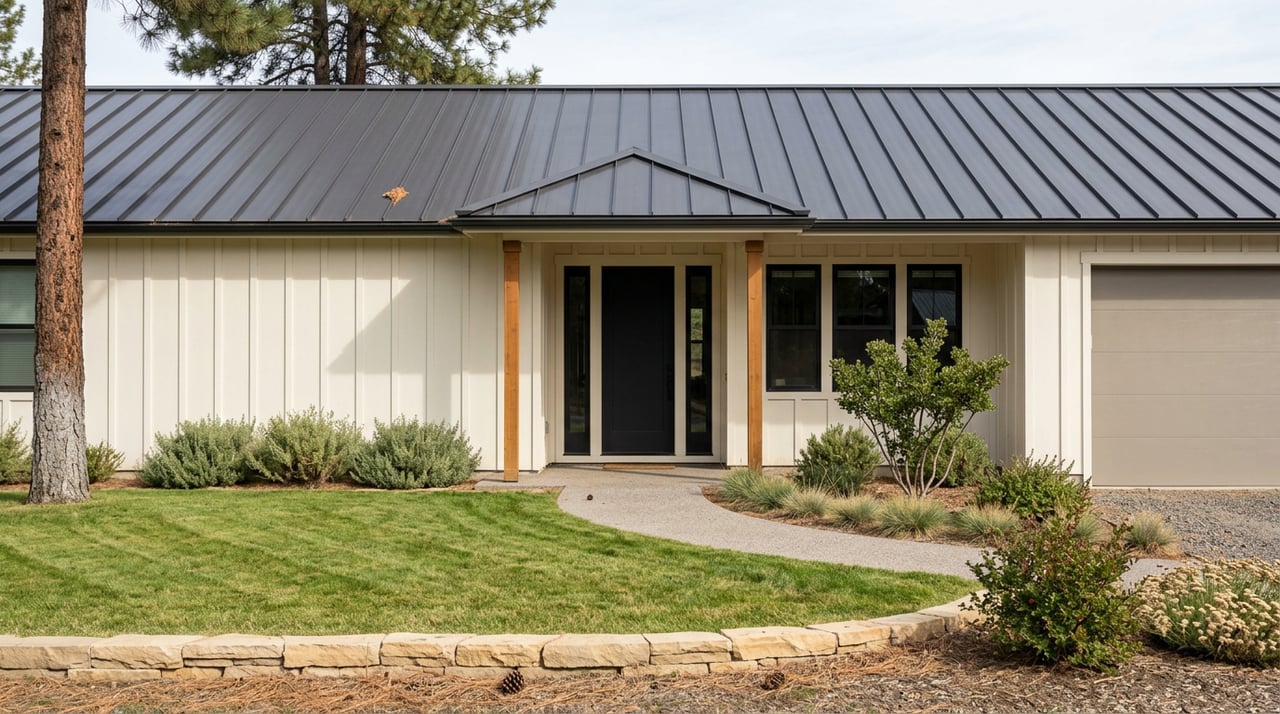
Why would a town's median home price jump eleven percent in six months while nothing about the town itself seems to have changed?
That's the question I keep getting from people comparing Minden to Gardnerville and Genoa this year. The number is real. Douglas County closing data through the first half of 2026 puts Minden's median sold price at $699,450, up from $629,975 over the same six-month window in 2025, a gain of roughly eleven percent, according to NNRMLS records. That's one of the strongest year-over-year gains anywhere in Northern Nevada. A separate monthly snapshot for June 2026 alone showed a median sold price of $730,000 on 16 closings, with the trailing twelve months up about 10.9 percent. Two different data windows, same direction, same rough magnitude.
What none of that tells you is why the number moved. And the why changes what you should actually do with it if you're deciding between Minden, Gardnerville, and Genoa this year.
A rising median can mean two very different things
Here's the part that gets skipped over in most of the market recaps I see. A climbing median doesn't automatically mean the same house is worth more than it was last year. It can also mean the mix of homes closing has shifted toward something bigger and newer, which pulls the whole number up even if the house you already own hasn't gained a dollar in value.
In Minden right now, it's mostly the second one.
The town's newest supply is concentrated in subdivisions like Saratoga Springs, Sunridge, and Wildhorse, where builders have been delivering larger, more current homes at a pace strong enough to shift the entire median. That's a supply story more than a broad demand story. It matters because it means the eleven percent gain is telling you something about what's getting built and sold in Minden right now, not necessarily what your own street looks like.
The valley doesn't share one price tag
Zoom out to the whole valley and the spread gets even more interesting. Across 302 Douglas County closings in the first half of 2026, the blended median ran roughly $625,000 with homes averaging about 60 days from list to contract. But that composite number hides three very different towns.
| Town | Median Sold Price, H1 2026 | Active Listings, Mid-2026 |
|---|---|---|
| Gardnerville | $552,500 | 182 |
| Minden | $699,450 | 112 |
| Genoa | $1,319,950 | 30 |
The gap between Gardnerville's median and Genoa's runs about 2.4 times, one of the widest intra-market spreads of any small region in Nevada. Gardnerville's active listings have grown to roughly six times Genoa's, which tells you as much about each town's pace of new construction as it does about buyer demand.
A number that big isn't really about scarcity. It's about which towns are still building and which ones are mostly built out.
Genoa, Nevada's oldest settlement, has very little room left to add new inventory, so its median reflects the character of homes that already exist there. Minden and Gardnerville are both still absorbing new subdivisions, which is exactly why their medians are moving in ways that older, more settled towns don't.
Where the new supply is actually coming from
Minden's identity has always had two layers. There's the historic core around the Minden town square and CVIC Hall, walkable and settled for decades. Then there's the newer ring of master-planned neighborhoods that has been filling in around it. The price growth you're reading about isn't coming from the historic core. It's coming from that newer ring.
That distinction matters if you're picturing yourself in Minden. A budget that fits the town-wide median might land you in a brand-new subdivision home on the edge of town, or it might not stretch to a smaller, older home closer to downtown. The median doesn't tell you which one you're getting. It just tells you what's been closing.
What this actually means for price per square foot
Here's the detail that changes the comparison most people are making. Minden's average sold price in the first half of 2026 ran about $345 per square foot. Despite having a higher median dollar figure than Gardnerville, Minden actually trades slightly cheaper per square foot, because its typical home is larger. You're paying for more house and a newer build, not a premium lot.
That flips the intuitive read of the headline. If you only look at the median dollar figure, Minden looks like the pricier option next to Gardnerville. If you look at what a dollar actually buys in square footage, the two towns are a lot closer than the median alone suggests, and Minden may even come out ahead depending on what you're comparing it to.
This is the piece I'd want any buyer to walk away with. The median tells you about the type of home that's selling. Price per square foot tells you more about what your money actually buys once you get past the headline.
Reading days on market like a buyer, not a headline
There's one more thread worth pulling. Carson Valley in mid-2026 sits in a genuine transition zone, with median days on market stretching to roughly 60 across the valley, up from the 30-day pace that defined the frenzy years. Inventory has climbed to its highest level in five years, which is part of why that pace has slowed.
As a rough rule, when a market carries two to three months of supply, sellers still hold most of the leverage. When it stretches toward four to six months, buyers start regaining room to ask for repairs, rate buydowns, and closing cost credits without losing the house. Minden's own figures fit that shift: 122 closings in the first half of 2026, a median of 61 days to contract, and an active count of 112 listings, up sharply from a year earlier.
None of that means prices are falling. It means the pace has eased enough that a rising median and a more patient, more negotiable market can exist at the same time. That's an easy thing to miss if you only read the headline number.
A few practical takeaways if you're weighing Minden against its neighbors:
- Compare price per square foot alongside the median, especially between Minden and Gardnerville, where the dollar figures can be misleading on their own.
- A longer days-on-market window this year means more room to ask questions and negotiate, not a market you need to rush into.
- If a newer subdivision home is within budget, factor in that you're often paying for more square footage and recent construction rather than a premium location, which is a different value trade than an older home closer to downtown.
A few questions I hear often
Does an eleven percent median gain mean my Minden home is worth eleven percent more than last year? Not necessarily. Town-wide medians move with whatever mix of homes happened to close, and right now that mix leans toward newer subdivision construction. The most reliable way to know what your specific home is worth is a comparison built from homes like yours, not the town-wide number.
Is Minden more expensive than Gardnerville right now? By median dollar figure, yes, as of the first half of 2026. By price per square foot, the two towns run much closer, and Minden's larger typical home size means you're often getting more space for the money rather than paying a true premium.
With days on market stretching out, should I wait to buy? The valley has shifted from a 30-day frenzy pace toward a more balanced 60-day pace in mid-2026, which generally favors buyers with more time and more negotiating room. Whether waiting makes sense for you depends more on your own timeline and financing than on trying to time a slow-moving valley-wide shift.
If you're trying to figure out what a specific budget actually buys in Minden versus Gardnerville versus Genoa this year, that's exactly the kind of conversation I love having. I'll pull the real comparables for your situation, not just the town-wide averages, so you can see what you're actually choosing between.
Kaycee Summers — Let's Connect.